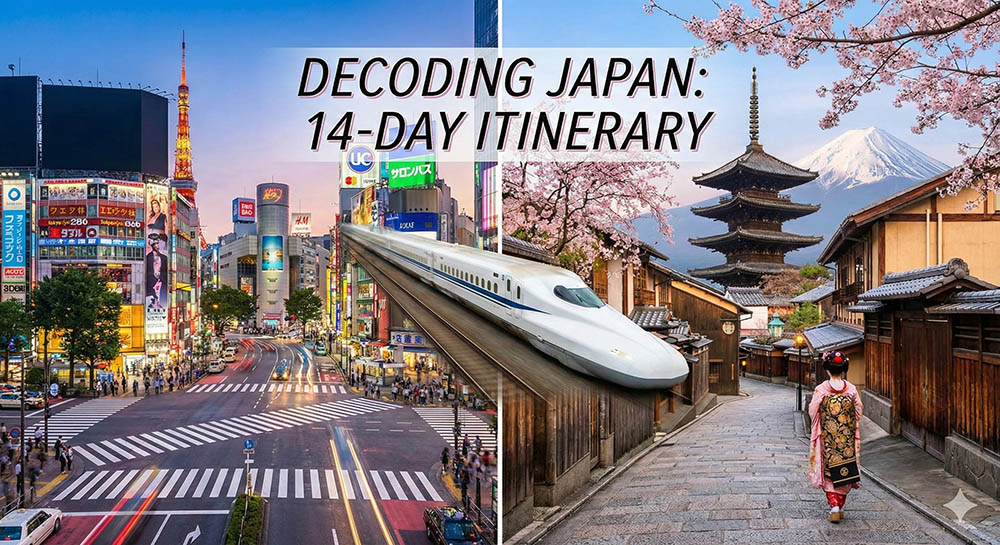
Japan is a glorious paradox. It is a land where hyper-futuristic neon metropolises sit alongside serene, centuries-old temples; where bullet trains connect cities at breakneck speeds, yet the art of a tea ceremony demands absolute stillness.
For the first-time visitor, planning a trip here can feel incredibly daunting. The rail system is complex, the language barrier is real, and the sheer volume of “must-see” attractions is overwhelming. You want to see the robot restaurants and the Zen gardens, eat street food in Osaka and kaiseki in Kyoto.
How do you fit it all in without burning out?
Welcome to your essential guide. We are decoding Japan with the ultimate 14-day itinerary for first-timers. This comprehensive plan focuses on the “Golden Route”—the classic path connecting Tokyo, Kyoto, and Osaka—balancing major tourist highlights with necessary breathing room to actually enjoy the experience.
Pre-Trip Logistics: The Boring (But Vital) Stuff
Before we dive into where you’ll be eating sushi, we need to handle the logistics that trip up most beginners.
1. The JR Pass Dilemma
For decades, the Japan Rail (JR) Pass was a no-brainer. However, a significant price hike in late 2023 changed the math.
For this specific 14-day itinerary, a 7-Day or 14-Day nationwide JR Pass might not pay off compared to buying individual Shinkansen (bullet train) tickets, unless you add extensive long-distance day trips. Pro Tip: Use a “JR Pass Calculator” online before buying. Often, buying single tickets or regional passes is now cheaper.
2. Connectivity is King
Do not rely on public Wi-Fi. To navigate the complex Tokyo subway or translate menus, constant connectivity is essential. Order a Pocket Wi-Fi device or an eSIM (like Airalo or Ubigi) before you arrive to activate upon landing.
3. The IC Card (Suica/Pasmo)
You need an IC Card (essentially a reloadable transit card like an Oyster card in London). These are used for subways, buses, and even vending machines.
-
iPhone Users: You can add a digital Suica card directly to your Apple Wallet and load it with a foreign credit card. This is the easiest method.
-
Physical Cards: Due to chip shortages, physical Suica cards are hard to find at Tokyo airports right now. Look for the “Welcome Suica” or “Pasmo Passport” tourist versions instead.
The 14-Day Itinerary at a Glance
-
Days 1-5: Tokyo (The Neon Metropolis & Historic Pockets)
-
Day 6: Hakone (Mt. Fuji Views & Hot Springs)
-
Days 7-10: Kyoto (The Cultural Heart)
-
Days 11-12: Osaka (The Kitchen of Japan)
-
Day 13: Day Trip (Nara or Hiroshima)
-
Day 14: Departure
Part 1: Tokyo – Immersion in the Future-Past (Days 1-5)
Tokyo is not one single city; it’s a collection of massive, distinct cities sewn together by the world’s best train network.
Day 1: Arrival and Shinjuku Shock
Land at Narita (NRT) or Haneda (HND). Take the express train into the city and check into your hotel. Shinjuku is the best base for first-timers due to its connectivity.
-
Evening: Head to the Tokyo Metropolitan Government Building (free entry) for your first dazzling view of the sprawling cityscape.
-
Dinner: Dive into Omoide Yokocho (Piss Alley) in Shinjuku for yakitori skewers in tiny, atmospheric stalls.
Day 2: Old Tokyo and Electric Town
-
Morning: Head to Asakusa to see Senso-ji, Tokyo’s oldest and most impressive temple. Enter through the massive Kaminarimon (Thunder Gate).
-
Afternoon: Walk across to Tokyo Skytree or head to Ueno Park, home to incredible museums and the Ameyoko street market.
-
Late Afternoon/Evening: Akihabara. Even if you aren’t into anime or gaming, the sensory overload of multi-story arcades and maid cafes is a quintessential Tokyo experience.
Day 3: Pop Culture and The Scramble
-
Morning: Visit the serene Meiji Jingu Shrine, located in a massive forested park in the city center.
-
Afternoon: Walk from the shrine to Harajuku. Walk down Takeshita Street (crowded, intensely cute teen fashion) and explore the more upscale backstreets of Omotesando.
-
Evening: Shibuya Crossing. Witness the world’s busiest pedestrian crossing. Grab a coffee at the Starbucks overlooking the intersection for the classic time-lapse view.
Day 4: Digital Art and Fish Markets
-
Morning: Prioritize teamLab Planets in Toyosu (book tickets weeks in advance). It is an immersive, barefoot digital art museum that lives up to the hype.
-
Lunch: Head to the Tsukiji Outer Market. While the inner wholesale auction moved, the outer market is thriving with incredible street food—try Wagyu skewers and fresh tamagoyaki (egg omelet).
-
Evening: Explore glamorous Ginza for shopping or Roppongi Hills for city views and Mori Art Museum.
Day 5: Tokyo Wildcard
Your choice: A day trip to Kamakura (the giant Buddha and coast), a day at Tokyo DisneySea (unique to Japan), or exploring quieter, retro neighborhoods like Yanaka Ginza for a slower pace.
Part 2: The Mountain Breather (Day 6)
Day 6: Hakone and Mt. Fuji Dreams
-
Morning: Take the “Romancecar” train from Shinjuku to Hakone. This is Japan’s premier hot spring (onsen) resort area near Mt. Fuji.
-
Day: Do the “Hakone Loop,” using trains, cable cars, ropeways, and a pirate ship across Lake Ashi. On a clear day, the views of Mt. Fuji are incredible.
-
Evening: Stay in a traditional ryokan (Japanese inn) with a hot spring bath. Splurge on a kaiseki dinner (multi-course traditional meal) served in your room. Note: Forward your large luggage from Tokyo to Kyoto so you only carry an overnight bag to Hakone.
Part 3: Kyoto – Temples, Gardens, and Geisha (Days 7-10)
Kyoto is the historical soul of Japan. It requires early mornings to beat the crowds at famous spots.
Day 7: The Bullet Train and Gion at Dusk
-
Morning: Take the Shinkansen from Odawara (near Hakone) to Kyoto.
-
Afternoon: Check into your hotel (stay near downtown or Kyoto Station for ease). Explore Nishiki Market, “Kyoto’s Kitchen.”
-
Evening: Wander the atmospheric streets of Gion, the famous Geisha district. Visit Hanamikoji Street just before sunset. You might spot a Geiko or Maiko rushing to an appointment (remember: respectful distance, no photos of them).
Day 8: The Iconic Golden Pavilion and Bamboo Grove
-
Morning (Very Early): Arrive at Arashiyama Bamboo Grove by 7:30 AM to experience it without a sea of tourists. Visit the nearby Tenryu-ji temple.
-
Late Morning: Take a taxi or bus across town to Kinkaku-ji (The Golden Pavilion). It’s stunning, though always crowded.
Day 9: Orange Gates and Wooden Stages
-
Morning (Very Early): Fushimi Inari Shrine. Famous for its thousands of vermillion torii gates winding up a mountain. Arrive before 8:00 AM and hike at least halfway up to escape the crowds near the base.
-
Afternoon: Explore the Higashiyama District. Visit Kiyomizu-dera, a massive wooden temple on stilts offering incredible views of the city. Walk down the preserved historic streets of Sannenzaka and Ninenzaka.
Day 10: The Philosopher’s Path to Silver
-
A slower day. Start at Ginkaku-ji (The Silver Pavilion)—known for its stunning moss and sand gardens rather than flashy gold.
-
Walk the Philosopher’s Path, a peaceful canal-side walk lined with cherry trees, popping into small temples like Eikan-do along the way.
Part 4: Osaka and History (Days 11-13)
Osaka is Kyoto’s boisterous, food-obsessed cousin, just a short train ride away. It’s the best base for your final days.
Day 11: Osaka Castle and Dotonbori Gluttony
-
Morning: Travel to Osaka (30 mins from Kyoto). Visit the impressive Osaka Castle and its surrounding park grounds.
-
Evening: This is what Osaka is for: Dotonbori. Neon madness by the canal. Eat takoyaki (octopus balls), okonomiyaki (savory pancakes), and kushikatsu (fried skewers) under the Glico Man sign.
Day 12: Day Trip to Nara
-
Take the 45-minute express train from Osaka to Nara.
-
Nara was Japan’s first permanent capital. It is famous for Nara Park, where hundreds of wild (but semi-tame) deer roam freely and bow for crackers.
-
Visit Todai-ji Temple, a massive wooden structure housing one of Japan’s largest bronze Buddha statues. It is awe-inspiring.
Day 13: Hiroshima and Miyajima (Long Day Trip)
-
Use the Shinkansen from Osaka to Hiroshima (approx. 90 mins).
-
Morning: Visit the sobering and essential Hiroshima Peace Memorial Park and Museum and the Atomic Bomb Dome.
-
Afternoon: Take a short ferry to Miyajima Island to see Itsukushima Shrine and its famous “floating” torii gate in the water. Watch the sunset behind the gate before heading back to Osaka.
Day 14: Sayonara
Depart from Osaka’s Kansai International Airport (KIX), or take the Shinkansen back to Tokyo for a flight out of Narita or Haneda, depending on your booking.
Final Tips for First-Timers
-
Cash is (Still Often) King: While cards are accepted more widely post-pandemic, many small ramen shops, temples, and market stalls still only take cash. Always carry Yen.
-
Use Takkyubin (Luggage Forwarding): This is a game-changer. For about $20 USD, you can send your large suitcase from your Tokyo hotel desk directly to your Kyoto hotel, arriving the next day. This frees you up for the Hakone stopover.
-
Wear Comfortable Shoes: You will easily walk 20,000+ steps a day. Japan is not the place to break in new footwear.
Decoding Japan takes time, but this 14-day itinerary gives you the perfect framework for an unforgettable first journey. Itadakimasu!